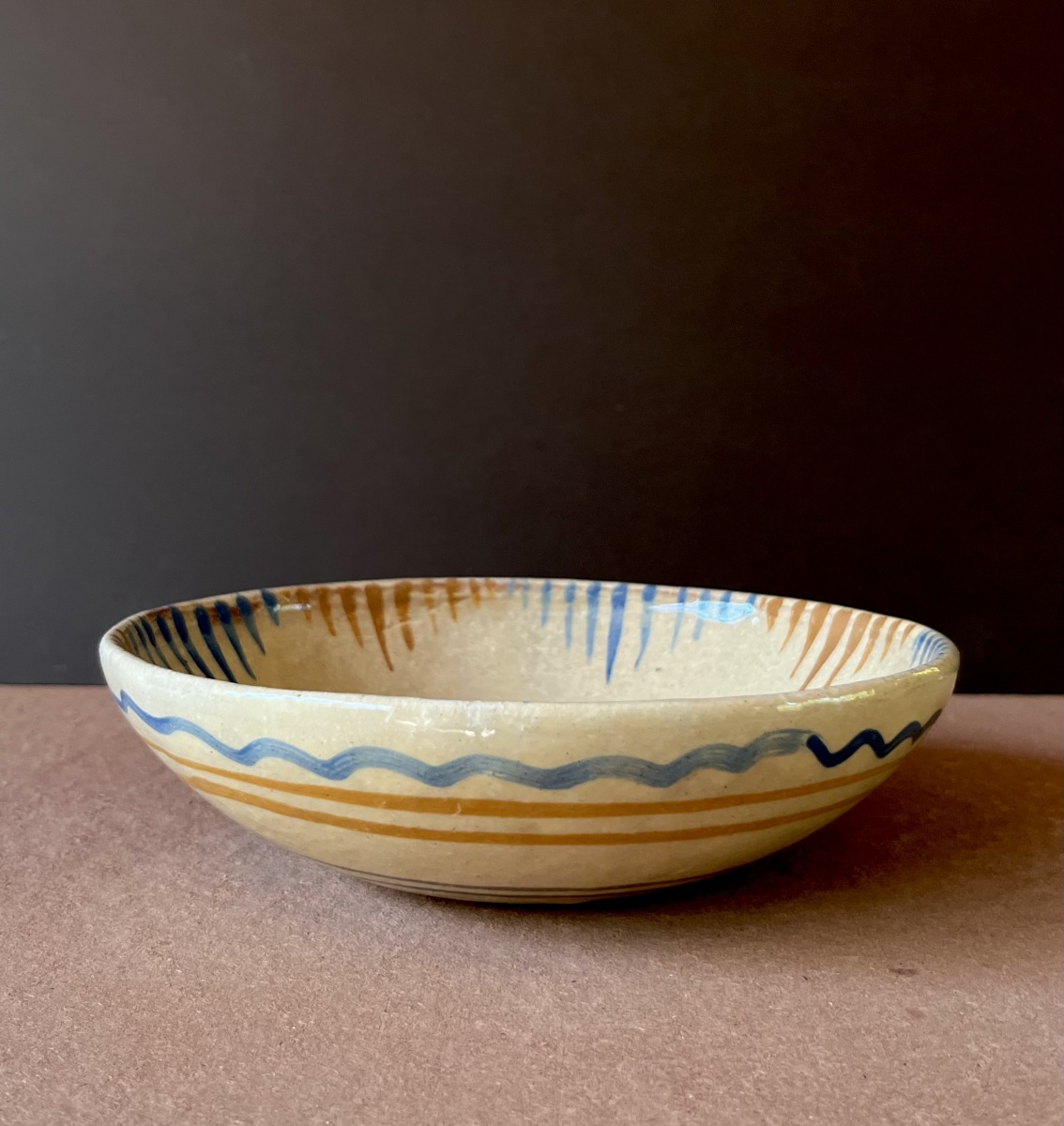
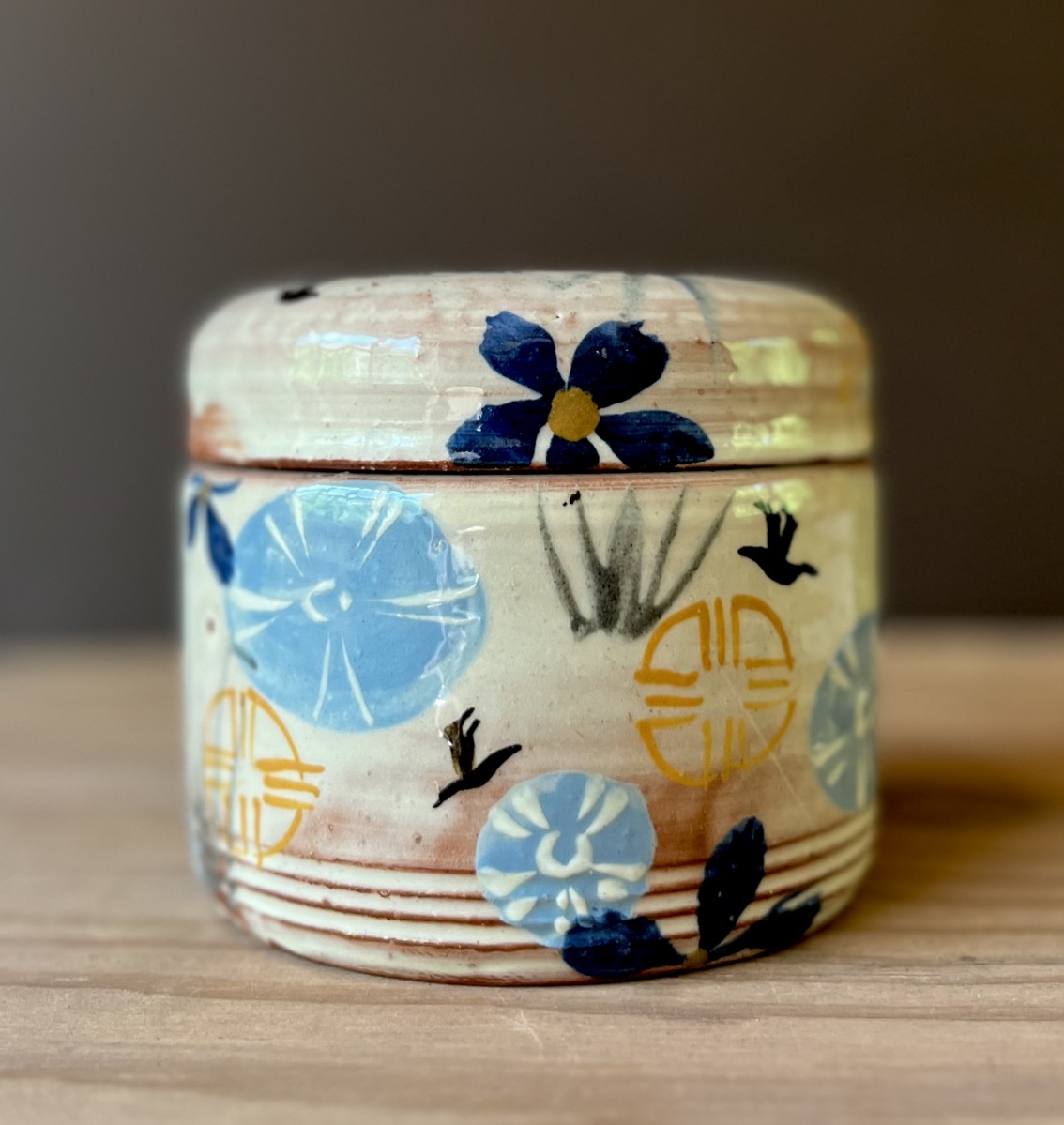
I make pots for eating, drinking and cooking. I also occasionally make small figures and birds.
I first encountered pottery making at school when I was 11.
In fact it wasn’t pots I made but birds to start with, so I’ve come full circle. Later it was hand built pots which I raku fired in a kiln I’d built in my parents’ garden.
What awakened me to making practical pots was an exhibition at the Crafts Council in 1984 called Tableware.
It sparked something in me and I had to learn to throw because this seemed to be the way to make pots for eating from.
I’d had Bernard Leach’s A Potter’s Book since school.
Then I discovered the Omega workshops, and the European tradition of vernacular pottery, and colour.
I studied English Literature at university and in 1986 I joined the Harrow Studio Pottery course at Harrow College of Higher Education, that’s what got me started as a potter.

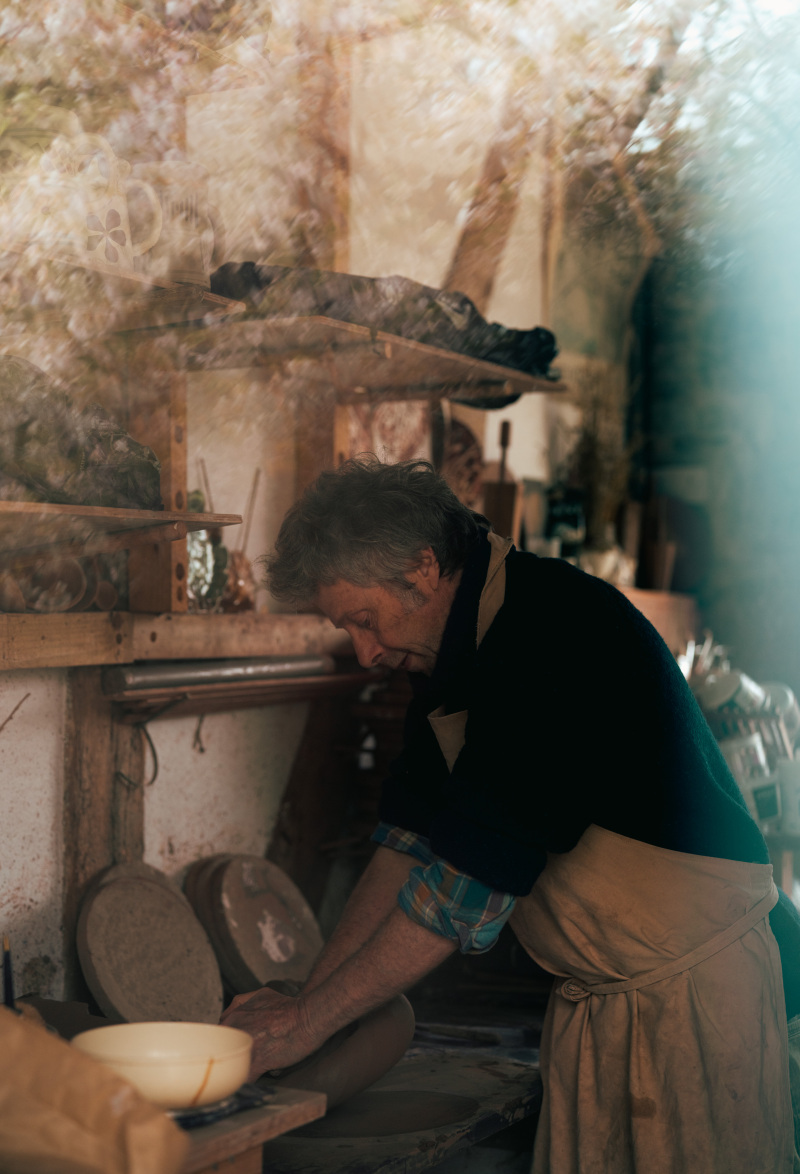
By the end of the course I could throw a bit, make glazes, build a kiln.
I started my first workshop in 1989 in an old glass works in Ealing, and then two years later at Eel Pie Island, in a boatyard. Both surprisingly good places for making and selling pots.
I supplied quite a few shops and galleries, and spent some time as resident potter at Charleston Farmhouse in Sussex.
I’ve had my current workshop where I live outside Kington in north Herefordshire since 2008
People often say potting looks therapeutic.
They mean mentally therapeutic, and it definitely is for me. I think the concentration and absorption is good for you. It gathers me together and makes me feel good.
It’s a fine mixture of routine tasks and new ideas.
It’s also of course solving problems, looking closely at things and taking hints, often from mistakes and chance happenings.
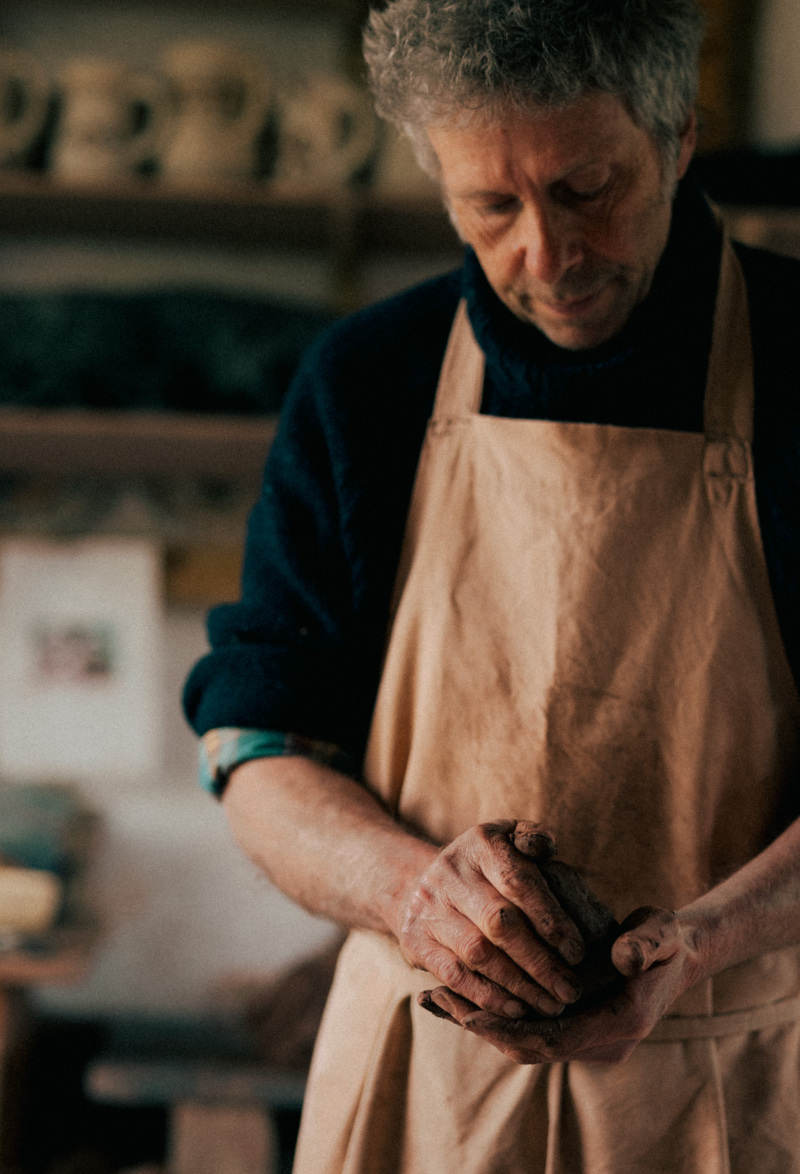

If you asked me what pottery making means for me I’d say – exploration, excitement, absorption, fantasy and slow learning.
I say fantasy because as with anything somewhat creative there’s a lot of fantasy, or imagining something, followed by long pursuit.
Often fruitless.
The excitement comes from the nature of the pottery process – it can’t all be done at once, in one session, normally.
So there’s necessarily a lot of waiting, or delay.
There’s the calm appraisal of what you made the day before, now drier, stiffer and subtly changed.
There’s the adding handles, turning or trimming, slipping, decorating, firing, glazing – a delay after each of these processes.
And finally, almost finally, the background anticipation of a kiln cooling down and then the opening tomorrow.


It has much in common with gardening, or indeed looking after anything.
The need to go back, tend, step back.
Potting is actually quite technical too. A lot can go wrong, often irretrievably. But a lot is given to you too, by the materials and whatever happens along the way.
I quite often reflect about why I like hand made pots so much.
I think it’s to do with the way they enter our lives, somewhat stealthily and benignly and exert a quiet influence.
They are companions, and can offer beauty, comfort, practical service, sensuous experience all in a modest almost subliminal way.
This is the beauty of pottery – it lives side by side with us, not calling for attention, and not provoking self-consciousness.
And it allows, by slow release, discoveries of depth and detail.


Pots on the whole don’t have the status or value of fine art.
But I believe pottery – far from being at a real disadvantage – enjoys a rather privileged position.
After all it lives at the centre of our lives, where we eat, drink gather, muse, enjoy ourselves.
That’s pretty good.